
Introduction
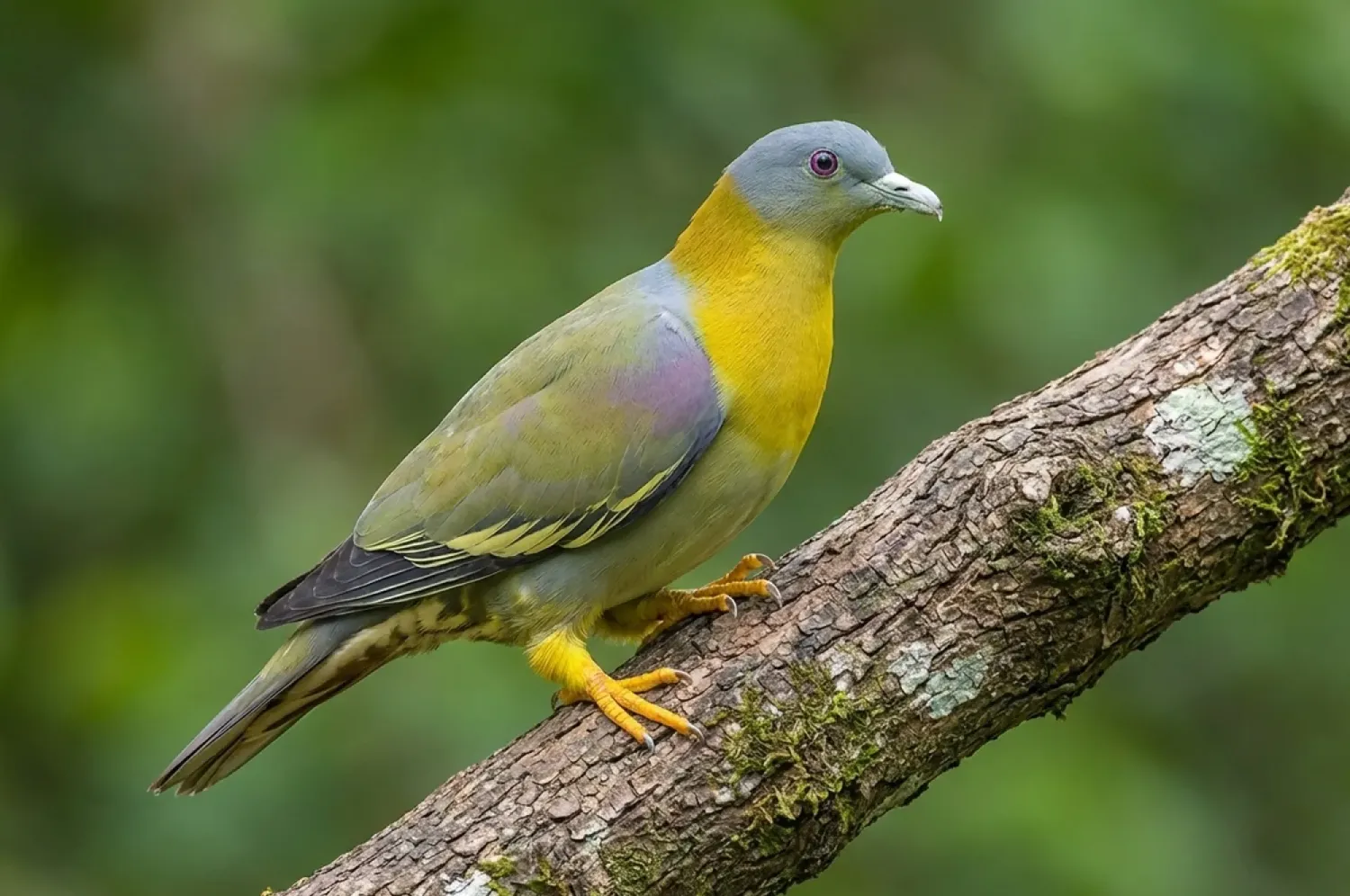
The yellow-footed green pigeon (Treron phoenicopterus), also known as the yellow-legged green pigeon, is a vibrant and common species of green pigeon found across the Indian subcontinent. Known as Hariyal in Marathi, this bird holds the prestigious title of being the state bird of Maharashtra. It belongs to the family Columbidae and is often celebrated for its beautiful plumage and social nature.
Physical Appearance
The yellow-footed green pigeon is a medium-sized bird, typically measuring between 31 to 35 cm in length and weighing approximately 200 to 250 grams. Its most striking features include:
- Crown and Nape: Bluish gray in color.
- Neck: A distinct yellowish mustard hue.
- Upperparts: Primarily grayish green.
- Underparts: Pale yellowish orange on the throat and breast, becoming paler towards the belly.
- Legs and Feet: Bright yellow, which gives the species its name.
- Bill: Creamy white with a curved upper mandible tip.
- Eyes: Reddish brown irises.
Habitat
These pigeons exhibit moderate forest dependence and are found at altitudes ranging from 0 to 1000 meters. Their habitats are diverse, spanning both natural and artificial ecosystems:
- Natural Habitats: Tropical and subtropical moist lowland forests, foothill forests, montane forests, scrublands, and dry shrublands.
- Artificial Habitats: Heavily degraded forests, rural gardens, and urban areas with sufficient tree cover.
Diet
The yellow-footed green pigeon is primarily frugivorous. Its diet consists of a large variety of fruits, with a particular preference for species of the Ficus genus (such as banyan and peepal figs). They are also known to consume some edible seeds. These birds usually forage in flocks, often descending upon fruiting trees in large numbers.
Breeding and Nesting
While specific breeding details vary by region, they generally build a simple, flimsy platform nest made of twigs, similar to other pigeons. They are often observed sitting in couples on tree branches during the breeding season, and they typically lay two white eggs per clutch.
Behavior
These birds are highly social and are usually seen in small to large flocks. A notable behavior is their tendency to sun themselves in the early morning on the tops of emergent trees in dense forest areas. They are arboreal and rarely descend to the ground, preferring to stay high in the canopy where they forage and rest.
Conservation Status - LC Least Concern
The yellow-footed green pigeon is currently classified as a species of Least Concern by the IUCN. It is a common and widespread species throughout its range in the Indian subcontinent, Southeast Asia, and parts of China, showing resilience even in human-modified landscapes.
Interesting Facts
- It is the official state bird of Maharashtra, India.
- In Marathi, the bird is popularly known as Hariyal.
- They are polytypic species, meaning they have several subspecies across their distribution range.
- They have a unique habit of sitting in pairs, which makes them a symbol of companionship.
- Despite their bright colors, they can be surprisingly hard to spot when camouflaged against green foliage.
Tips for Birdwatchers
To spot a yellow-footed green pigeon, keep the following tips in mind:
- Look for Ficus trees: They are almost always found near fruiting fig trees.
- Early Morning: Scan the very tops of tall trees at sunrise; they love to bask in the first light.
- Listen for whistles: They have a pleasant, musical whistling call that betrays their presence in thick foliage.
- Urban Parks: In cities like Mumbai or Pune, check large gardens and old cemeteries with mature trees.
Conclusion
The yellow-footed green pigeon is a magnificent representative of the Indian subcontinent's avian diversity. Whether you admire it as the state bird of Maharashtra or simply enjoy its melodic presence in a garden, the Hariyal is a testament to the beauty of nature's design. Protecting the Ficus trees they depend on is essential for ensuring these vibrant birds continue to thrive in both wild and urban environments.
