Introduction
Introduction
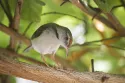
The Common Tailorbird (Orthotomus sutorius) is a vibrant and energetic songbird widely distributed across tropical Asia. Famous for its incredible architectural skills, this bird was immortalized as 'Darzee' in Rudyard Kipling's The Jungle Book. Despite its shy nature, it is a frequent resident of urban gardens and farmlands, often heard long before it is seen due to its loud, repetitive calls.
Physical Appearance
Physical Appearance
Small and agile, the Common Tailorbird typically measures about 13 cm in length. It is easily identified by its long, upright tail, which it frequently jerks while foraging. The upperparts are a bright olive-green, while the underparts are creamy white. A key identifying feature is its rust-colored forehead and crown. During the breeding season, males develop elongated central tail feathers, enhancing their distinctive silhouette.
Habitat
Habitat
Common Tailorbirds are highly adaptable and are commonly found in gardens, scrublands, forest edges, and cultivated areas. They prefer dense bushes and low vegetation where they can remain hidden from predators. Because they thrive in proximity to humans, they are one of the most recognizable passerine birds in urban environments throughout India and Southeast Asia.
Diet
Diet
As active insectivores, these birds forage tirelessly through foliage for beetles, bugs, and other small insects. They are particularly attracted to flowering trees like mango (Mangifera indica) and Silk Cotton (Bombax), where they hunt for prey attracted to the blossoms. While hunting for insects, they also consume nectar, often resulting in their heads being dusted with golden pollen.
Breeding and Nesting
Breeding and Nesting
The Common Tailorbird is legendary for its nesting technique. To create a safe cradle, the bird uses its sharp beak to pierce the edges of one or two large, living leaves. It then 'sews' them together using plant fibers or spider silk, creating a pouch. Inside this leafy pocket, it constructs a soft nest of grass and hair. This unique method provides excellent camouflage against the surrounding green foliage.
Behavior
Behavior
Though they are shy and prefer to stay hidden within thick vegetation, Common Tailorbirds are remarkably bold with their vocalizations. They are active birds, constantly hopping between branches with their tails cocked high. Their flight is short and undulating. They are mostly solitary or found in pairs, maintaining territories through their persistent and loud 'chwee-chwee-chwee' calls.
Conservation Status - LC Least Concern
Conservation Status
The Common Tailorbird is currently classified as Least Concern by the IUCN. It is a widespread resident and benefits from human-modified landscapes like gardens and parks. Its ability to adapt to urban environments has kept its population stable across its range.
Interesting Facts
Interesting Facts
- The name 'Tailorbird' comes directly from their ability to stitch leaves together to form a nest.
- The bird was the inspiration for the character Darzee in Kipling's The Jungle Book.
- They use spider silk as 'thread' for their nests, which has elastic properties allowing the nest to expand as chicks grow.
- They are known to visit flowers specifically for nectar, making them incidental pollinators.
- Unlike many birds, they often use living leaves for nests, which helps keep the structure camouflaged and fresh.
Tips for Birdwatchers
Tips for Birdwatchers
- Listen for the Call: Their loud, ringing 'techee-techee' call is the easiest way to locate them in a garden.
- Look Low: Search in low bushes and thickets rather than high tree canopies.
- Watch the Tail: Their habit of holding their tail upright and jerking it is a classic identification giveaway.
- Observe Mango Trees: During flowering seasons, these trees are prime spots to watch them foraging for insects.
Conclusion
Conclusion
The Common Tailorbird is a testament to the wonders of avian engineering. Its ability to thrive in our backyards while maintaining its complex nesting traditions makes it a fascinating subject for any nature enthusiast. By preserving urban greenery and gardens, we ensure that the cheerful call of this tiny 'tailor' continues to be a staple of the tropical landscape.