
Introduction
The Indian Nightjar (Caprimulgus asiaticus) is a small, nocturnal bird found across South and Southeast Asia. Known for its incredible camouflage and distinctive call, it is a fascinating subject for bird enthusiasts and wildlife photographers alike.
Physical Appearance
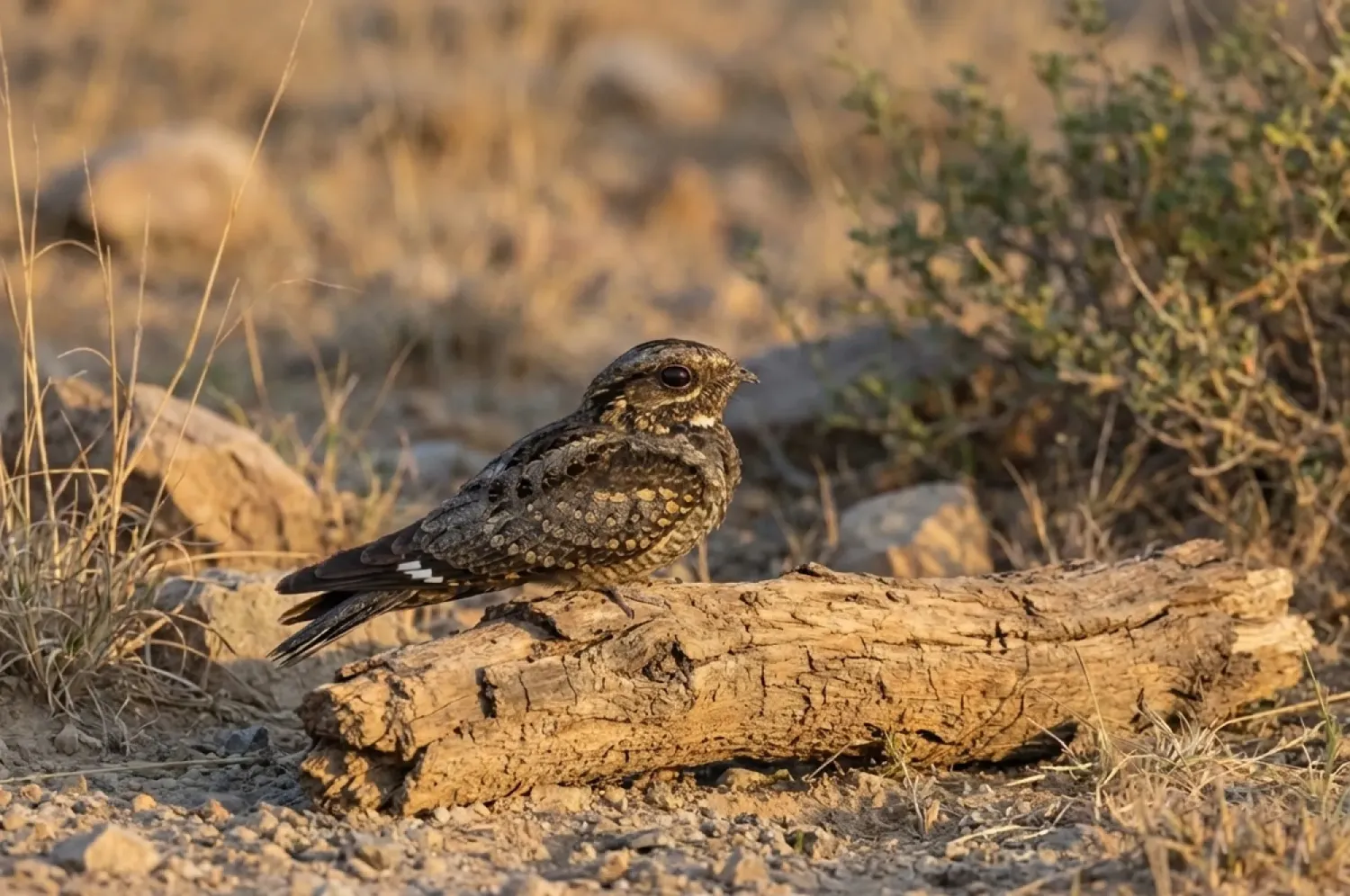
Measuring approximately 24 cm in length, this bird features a mottled grey and brown plumage that perfectly mimics the forest floor or dry leaf litter. It has a short bill with a wide gape, large eyes adapted for night vision, and characteristic white patches on its wings and tail that are visible during flight.
Habitat
The Indian Nightjar prefers open landscapes, including scrublands, dry deciduous forests, and agricultural fields. They are frequently found in areas with bare ground or low vegetation where they can blend in seamlessly during the day.
Diet
As an insectivorous species, its diet consists primarily of flying insects. They are most active at dusk and dawn, catching moths, beetles, and termites in mid-air using their wide mouths and specialized bristles.
Breeding and Nesting
Breeding typically occurs between February and September. They do not build traditional nests; instead, the female lays two creamy-pink, spotted eggs directly on the bare ground, relying entirely on camouflage for protection from predators.
Behavior
This species is crepuscular and nocturnal. During the day, it sits motionless on the ground or along a low branch. It is best known for its unique "tuk-tuk-tuk" call, which often sounds like a stone skipping across a frozen pond.
Conservation Status - LC Least Concern
According to the IUCN Red List, the Indian Nightjar is classified as Least Concern. While their population is currently stable, they face localized threats from habitat loss and the use of pesticides which can reduce their insect food source.
Interesting Facts
- They have a reflective layer behind the retina called the tapetum lucidum, which causes their eyes to shine bright red when caught in a light beam.
- Their plumage is so effective at camouflaging them that they often won't fly away until a person is just a few feet away.
- Unlike many other bird species, nightjars often perch along the length of a branch rather than across it to further enhance their disguise.
Tips for Birdwatchers
- Listen for their distinctive skipping-stone call at dusk to locate their general territory.
- Use a low-intensity flashlight to look for 'eye shine' in open scrub areas at night.
- Be extremely careful where you step in open fields during the breeding season to avoid disturbing ground nests.
Conclusion
The Indian Nightjar is a master of disguise and a vital part of the nocturnal ecosystem. By understanding its habits and habitat, birdwatchers can better appreciate the hidden diversity of the natural world after the sun goes down.
