
Introduction
The purple heron (Ardea purpurea) is a striking and wide-ranging species of wading bird belonging to the heron family, Ardeidae. Known for its slender build and elusive nature, this bird is a master of camouflage within its wetland environments. It is found across Africa, Europe, and Asia, with various populations exhibiting both migratory and sedentary behaviors.
Physical Appearance
The purple heron is a large bird, standing between 70 to 94 cm tall with a wingspan of 120 to 152 cm. Despite its impressive size, it is remarkably slender, weighing only 0.5 to 1.35 kg. Key physical features include:
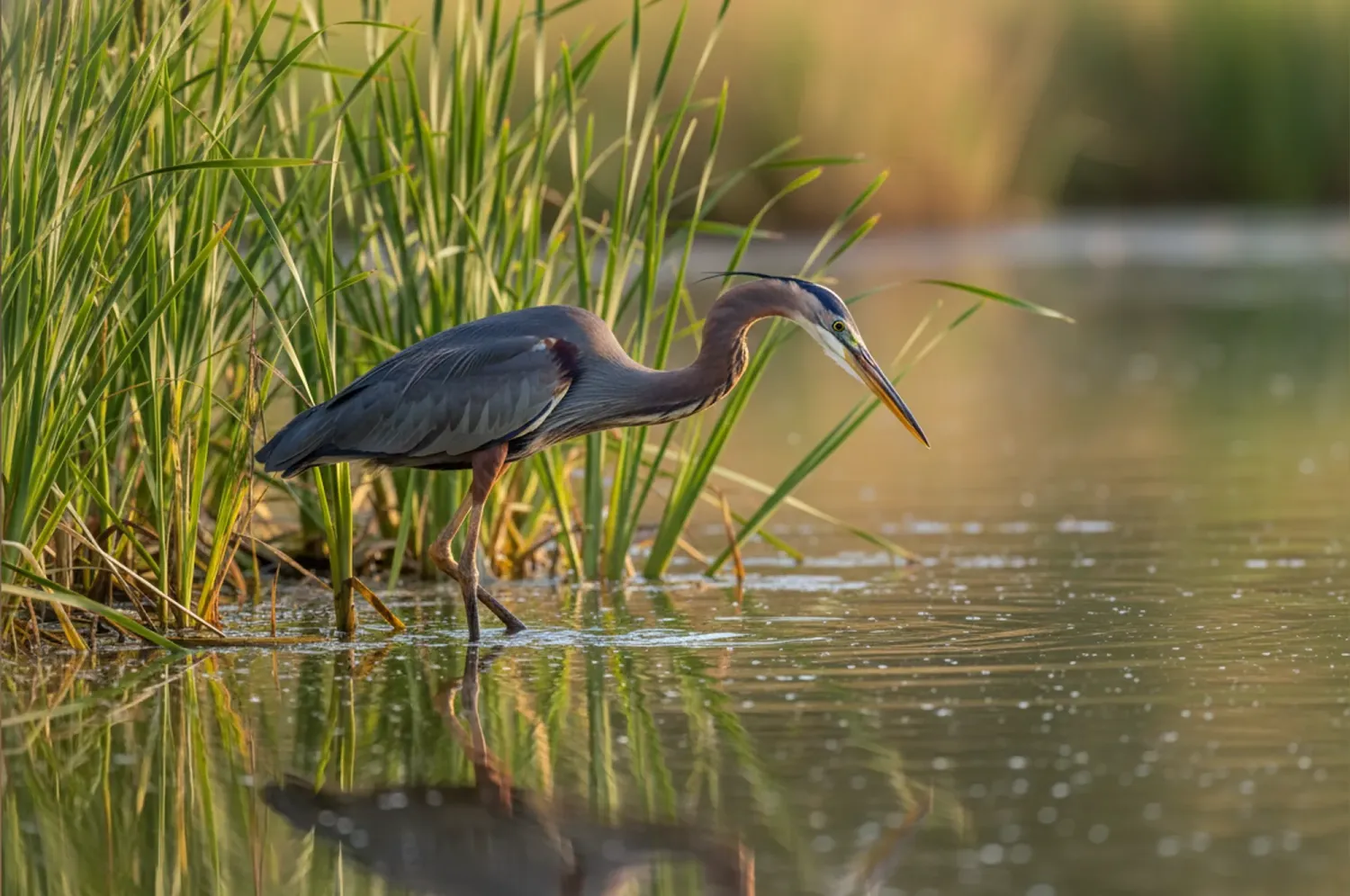
- Plumage: Dark reddish-brown and grey feathers, distinguishing it from the common grey heron.
- Head: A black crown with a dark stripe down the neck ending in a slender crest.
- Neck: Buffish chestnut sides with dark streaks, often held in a snake-like or oblique posture.
- Beak: A long, powerful, brownish-yellow bill that becomes brighter during the breeding season.
- Feet: Exceptionally long toes, which help it walk on floating vegetation.
Habitat
The purple heron is highly specialized for life in densely vegetated wetlands. Its preferred habitats include:
- Marshes and Lakes: Specifically those with extensive reedbeds (Phragmites).
- Open Wetlands: Used primarily outside of the breeding season, provided there is enough fringing vegetation for cover.
- Geographical Range: It breeds in southern and central Europe, Africa, and eastern Asia, favoring areas where it can remain hidden from predators and humans.
Diet
As a carnivorous predator, the purple heron has a diverse diet. It utilizes its sharp beak to hunt a variety of prey, including:
- Aquatic Life: Fish, frogs, tadpoles, molluscs, and crustaceans.
- Terrestrial Prey: Small rodents, lizards, and insects.
- Occasional Food: Small birds and some vegetable matter.
It typically hunts by standing perfectly still in an ambush position or by slowly stalking prey through shallow water.
Breeding and Nesting
Purple herons are colonial breeders, often nesting alongside other heron species. They build bulky nests made of dead reeds or sticks, usually situated close to the water's edge within dense vegetation. The female typically lays five bluish-green eggs, which are incubated by both parents for approximately four weeks. The chicks fledge about six weeks after hatching.
Behavior
Unlike the more visible grey heron, the purple heron is an evasive and shy bird. It is often seen adopting an oblique neck posture while standing among reeds to blend into its surroundings. It is less noisy than its relatives, though it emits a harsh "frarnk" call when disturbed. Its long toes allow it to navigate unstable, marshy ground with ease.
Conservation Status - LC Least Concern
The International Union for Conservation of Nature (IUCN) currently lists the purple heron as a species of Least Concern. However, global population trends are downward. The primary threat to this species is the drainage and degradation of wetlands, which destroys their essential breeding and feeding grounds.
Interesting Facts
- The scientific name Ardea purpurea literally translates to "purple heron" from Latin.
- Despite being nearly the same height as a grey heron, it weighs significantly less, giving it a "hollow-chested" appearance.
- It is a migratory species in the Western Palearctic, traveling long distances between Europe and Africa.
- The purple heron is known for its "snake-like" neck movements when it is alert or hunting.
- Its long toes are an adaptation for walking on lily pads and floating mats of vegetation.
Tips for Birdwatchers
To spot a purple heron, patience is key. Here are a few tips for birdwatchers:
- Location: Focus on the edges of large reedbeds rather than open water.
- Timing: They are most active during dawn and dusk (crepuscular).
- Equipment: Use a spotting scope to scan the reed line for the heron's slender, streaked neck.
- Listen: Familiarize yourself with its "frarnk" call, which is higher-pitched and quieter than the grey heron's call.
Conclusion
The purple heron is a masterpiece of avian adaptation, perfectly suited for the secret world of the reedbeds. While its population faces challenges due to habitat loss, it remains a vital and elegant part of wetland ecosystems across three continents. Protecting our marshes is essential to ensuring this "purple" wader continues to thrive.
