
Introduction
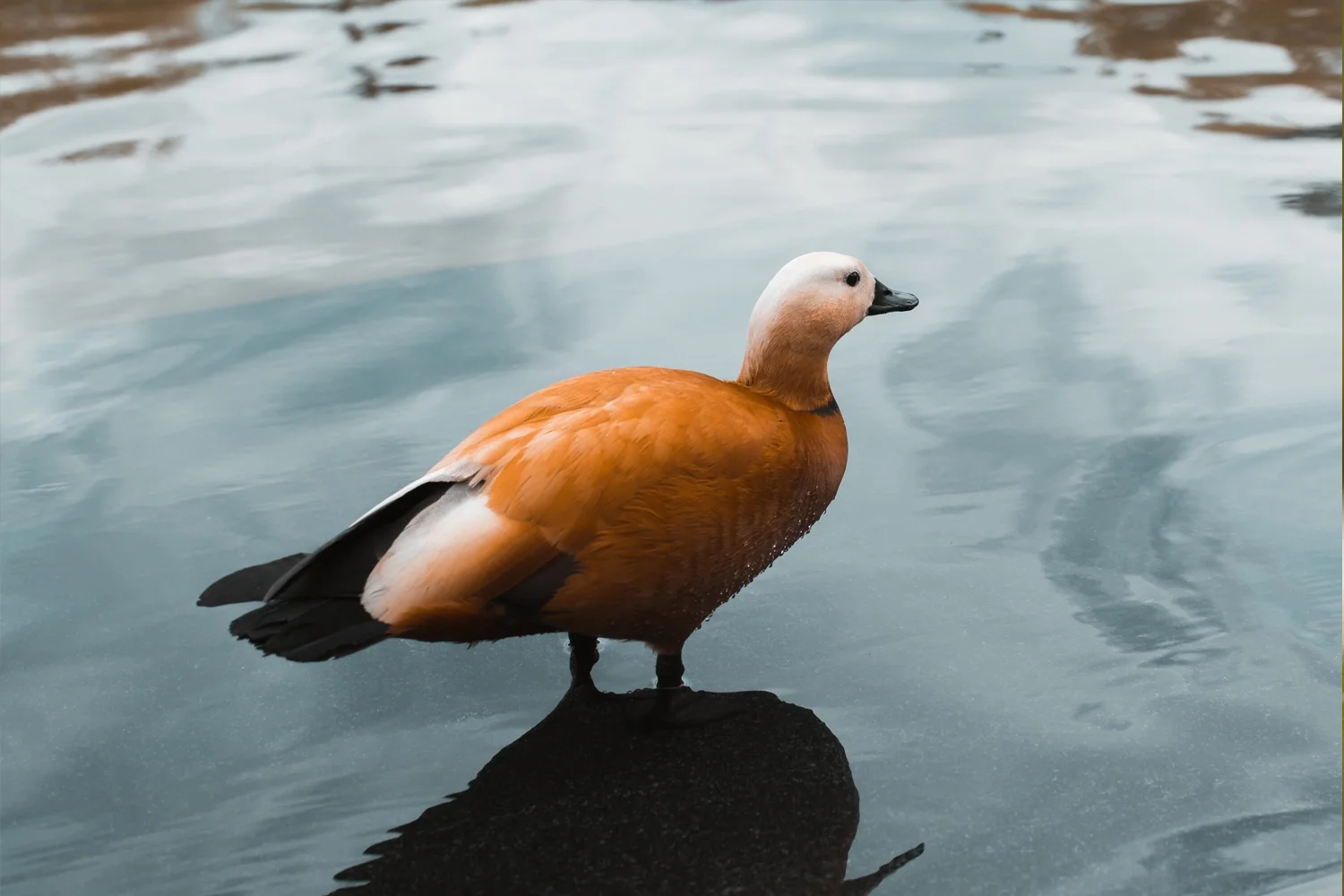
The Ruddy Shelduck (Tadorna ferruginea), famously known in India as the Brahminy duck, is a striking member of the family Anatidae. This distinctive waterfowl is celebrated for its unique coloration and loud, resonant calls. As a migratory species, it plays a significant role in the ecosystems of the Indian subcontinent, southeastern Europe, and central Asia.
Physical Appearance
The Ruddy Shelduck is a medium-to-large bird, measuring between 58 to 70 cm in length with a wingspan of 110 to 135 cm. It is easily identified by its vibrant orange-brown body plumage and a slightly paler head. In flight, it reveals a dramatic contrast between its black tail and flight feathers against white wing-coverts. The male typically features a narrow black collar around the neck during the breeding season, which the female lacks. Both sexes possess a black bill and dark grey legs.
Habitat
This species prefers open country and is frequently found near various water bodies, including brackish, salty, or freshwater lakes and rivers. While it can be found in mountain streams at elevations up to 900 metres, it generally avoids densely wooded or heavily vegetated areas. During the winter months, these birds often migrate to lower elevations and inland reservoirs.
Diet
The Ruddy Shelduck is an omnivore with a diet consisting primarily of plant matter. This includes:
- Grasses, leaves, and seeds
- Stems of aquatic plants
- Grain and vegetable shoots
- Invertebrates such as worms, insects, and molluscs
- Small fish and amphibians
Interestingly, they are also known to occasionally frequent rubbish dumps in search of food.
Breeding and Nesting
These birds form lasting pair bonds. Unlike many ducks, their nests are often located far from water, tucked away in crevices, cliff holes, or hollow trees. A typical clutch consists of about eight eggs, which the female incubates for approximately four weeks. Once hatched, both parents share the responsibility of caring for the young until they fledge at around eight weeks of age.
Behavior
The Ruddy Shelduck is known for its loud, nasal honking call, which can be heard both on the ground and while in flight. They are highly migratory birds, breeding in high-altitude regions of Central Asia and Europe before traveling to warmer climates like the Indian subcontinent for the winter. They are generally wary birds but can become habituated to human presence in certain protected areas.
Conservation Status - LC Least Concern
The International Union for Conservation of Nature (IUCN) has assessed the Ruddy Shelduck as a species of Least Concern. While populations in Europe are seeing a decline, the numbers in central and eastern Asia remain steady or are even increasing. Their wide range and large total population help maintain their stable status.
Interesting Facts
- In India, the bird is steeped in folklore and is known as the Brahminy Duck.
- The white wing-coverts are almost hidden when the bird is at rest but become a striking feature during flight.
- The male's black neck collar disappears during the post-breeding moult and returns between December and April.
- They are known to be quite vocal, with distinct variations in calls between males and females.
Tips for Birdwatchers
- Look for them in open wetlands and reservoirs during the winter months.
- Listen for their distinctive honking, which often announces their arrival before they are seen.
- Use binoculars to spot the white wing patches when they take flight, as this is a key identification mark.
- Check high-altitude lakes if birding in Central Asia during the summer breeding season.
Conclusion
The Ruddy Shelduck is a magnificent example of avian beauty and resilience. From its striking orange plumage to its impressive migratory journeys, it remains a favorite among birdwatchers and nature enthusiasts alike. Understanding its habitat and dietary needs is essential for the continued conservation of this iconic waterfowl.