
Introduction
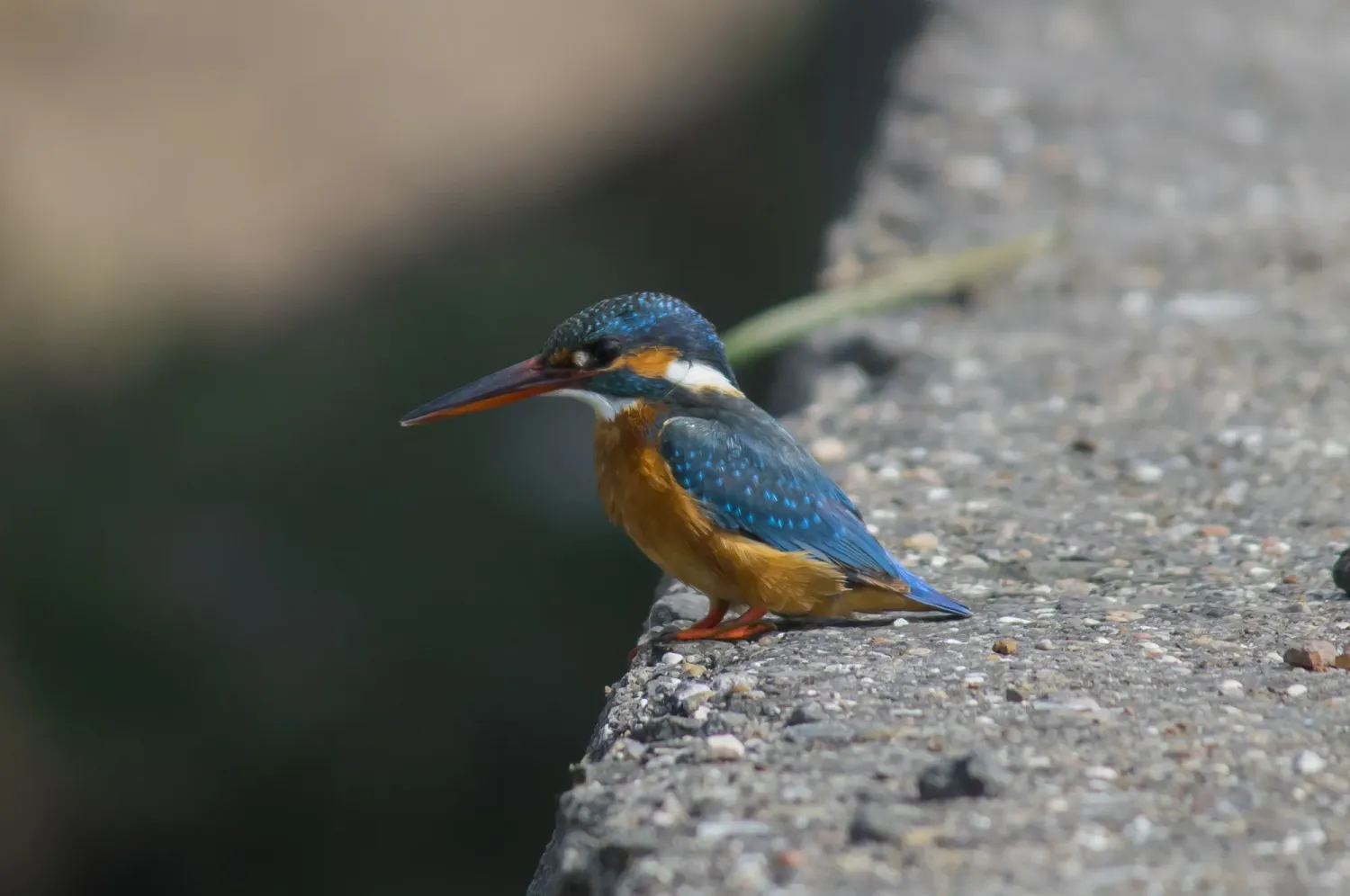
The Common Kingfisher (Alcedo atthis), also known as the Eurasian or river kingfisher, is a small, striking bird widely distributed across Eurasia and North Africa. This sparrow-sized bird is renowned for its vibrant plumage and specialized hunting techniques, making it a favorite for birdwatchers and photographers alike.
Physical Appearance
This species features a large-headed, short-tailed profile with a long, powerful bill. Key physical traits include:
- Plumage: Brilliant blue upperparts with a pale azure-blue back and rump, contrasted by bright orange/rufous underparts.
- Size: Approximately 16 cm in length with a wingspan of 25 cm.
- Sexual Dimorphism: Males have an entirely black bill, while females possess an orange-red lower mandible with a black tip.
- Juveniles: Duller, greener plumage with black bills and legs.
Habitat
The Common Kingfisher thrives in quiet waters with ample vegetation like reeds and shrubs for perching. Their habitats include:
- Freshwater streams, lakes, and ponds during the breeding season.
- Coastal areas, estuaries, and rocky seashores during the winter.
- Tropical populations are often found in mangroves, swamps, and wet grasslands.
Diet
The diet of the Common Kingfisher consists primarily of small fish and crustaceans, such as prawns and crabs. They are also known to catch insects in flight. To hunt, they dive steeply from perches, sometimes reaching depths of one meter to snatch their prey.
Breeding and Nesting
During the breeding season, these birds are monogamous and solitary nesters. They require suitable vertical banks to excavate a burrow, at the end of which glossy white eggs are laid. A notable courtship behavior involves the male presenting a fish to the female before copulation.
Behavior
Common Kingfishers are highly territorial and solitary birds. They defend their feeding grounds vigorously against intruders, including their own mates and young. Their flight is fast and direct, often low over the water, characterized by an electric-blue flash. To assist with underwater vision, their eyes are protected by a special membrane while diving.
Conservation Status - LC Least Concern
While not currently listed as globally threatened, the Common Kingfisher is sensitive to water pollution and habitat loss. In northern regions, winter freezes can impact populations by preventing access to food, leading to seasonal migrations.
Interesting Facts
- The bird uses a third eyelid (nictitating membrane) to protect its eyes and see clearly while underwater.
- It beats captured fish against a perch to kill them before swallowing them head-first.
- Kingfishers regularly regurgitate pellets containing indigestible fish bones and insect shells.
- They use a "bobbing" head motion to accurately judge the distance of prey before diving.
Tips for Birdwatchers
To spot a Common Kingfisher, look for a bright blue streak moving rapidly over the water's surface. Listen for their sharp, whistling calls and scan low-hanging branches or reeds near quiet riverbanks where they sit motionless while hunting.
Conclusion
The Common Kingfisher is a masterpiece of nature, combining stunning aesthetics with high-speed hunting precision. Protecting clean waterways and natural riverbanks is essential for ensuring this iconic blue-and-orange bird continues to thrive across its vast range.