
Introduction
The Ringed Kingfisher (Megaceryle torquata) stands as a magnificent testament to the diversity of avian life in the Americas. As the largest kingfisher species found in this region, it commands attention with its imposing size and vibrant, striking plumage. Often seen perched stoically over slow-moving rivers, lakes, and coastal lagoons, this bird is an iconic sight for birdwatchers traveling through the Neotropics. From southern Texas down to the depths of Argentina, the Ringed Kingfisher has adapted to a variety of aquatic environments, showcasing remarkable resilience and specialized hunting prowess. Unlike smaller members of its family, this species possesses a robust build that allows it to tackle larger prey, making it a dominant predator in its ecosystem. Understanding the life cycle, behavior, and environmental requirements of the Ringed Kingfisher is essential for both ornithologists and nature enthusiasts who aim to appreciate the intricate balance of riparian habitats across the Western Hemisphere.
Physical Appearance
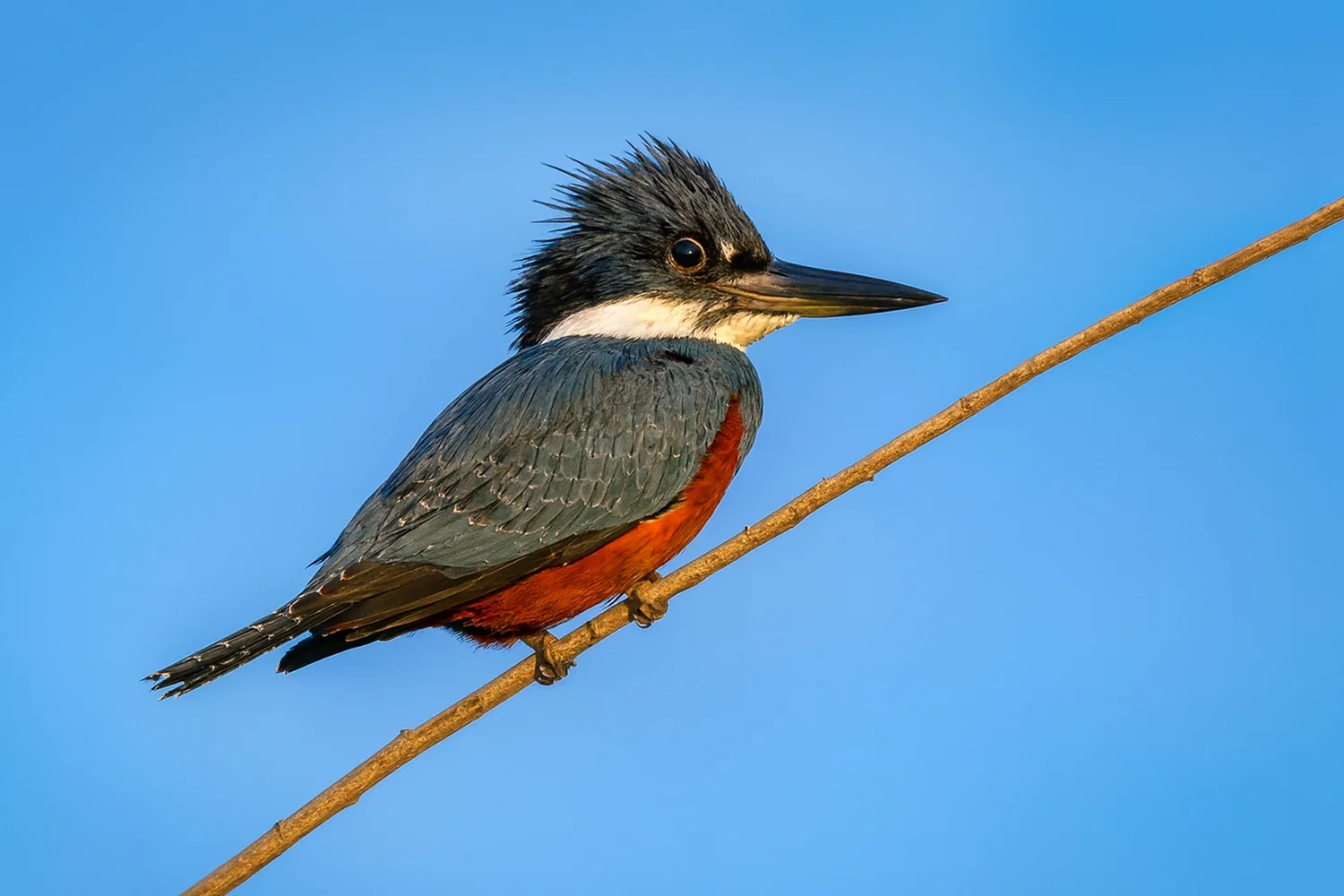
Measuring between 38 and 41 centimeters in length, the Ringed Kingfisher is easily identified by its substantial size and heavy, dagger-like bill. Its plumage is a masterpiece of contrast, dominated by a deep, slate-blue coloration across its back, wings, and head. A defining characteristic is the striking chestnut-colored underbelly, which separates it from other kingfisher species. Males and females exhibit subtle sexual dimorphism; while both share the blue-grey mantle and crested head, the female is often more vividly marked, featuring a broad blue-grey breast band bordered by a white collar. This white collar, or 'ring,' is where the species derives its common name. The crest on its head is frequently raised, adding to its alert and regal appearance when perched. Its feet are small and syndactyl, adapted for perching rather than walking, while its powerful wings allow for rapid, direct flight when the bird dives to capture fish or surveys its expansive territory.
Habitat
The Ringed Kingfisher occupies a wide range of aquatic habitats, primarily favoring areas near slow-moving water. Its preferred environments include riverbanks, lake shores, mangroves, and even brackish estuaries. These birds require clear vantage points, such as overhanging branches, utility wires, or rocky outcrops, to survey the water surface for prey. They are highly territorial and generally prefer areas with dense vegetation nearby, which provides essential cover and nesting sites. While they are predominantly found in lowland areas, their adaptability has allowed them to thrive in various elevations, provided there is a consistent source of fish and adequate nesting banks available for excavation.
Diet
As a specialized piscivore, the Ringed Kingfisher relies heavily on a diet of fish. It employs a 'sit-and-wait' hunting strategy, remaining motionless on a high perch until it detects movement below. Once prey is spotted, it performs a swift, plunging dive, often submerging completely to snatch the fish with its powerful beak. Beyond fish, its diet can be surprisingly varied; it has been observed consuming crustaceans, large aquatic insects, and occasionally small amphibians or reptiles. This opportunistic feeding behavior allows it to maintain its energy levels even when primary fish populations fluctuate, ensuring its survival throughout the diverse seasons of its expansive range.
Breeding and Nesting
The nesting habits of the Ringed Kingfisher are as specialized as its hunting techniques. Both the male and female participate in the excavation of a long, horizontal tunnel, typically dug into the vertical face of a sandy or muddy riverbank. These tunnels can reach depths of up to two meters, providing a secure, climate-controlled environment for their brood. Once the burrow is complete, the female lays a clutch of three to six white eggs. Both parents share the responsibility of incubation, which lasts approximately three weeks. After hatching, the chicks are fed by both adults, receiving a steady diet of regurgitated fish. The young remain in the safety of the dark tunnel for several weeks before fledging, during which time they develop the strength required to master their first dives into the water.
Behavior
The Ringed Kingfisher is a highly territorial bird, often seen aggressively defending its fishing perches from intruders of its own kind. They are known for their loud, raucous, and rattling calls, which serve to announce their presence or warn off competitors. While they are usually solitary, they may be seen in pairs during the breeding season. Their flight is strong and direct, characterized by rapid wingbeats followed by short glides. When hunting, they exhibit incredible patience, sitting still for extended periods, showing a level of focus that is characteristic of the Alcedinidae family, making them fascinating subjects for patient wildlife observers.
Conservation Status - LC Least Concern
Currently, the Ringed Kingfisher is classified as a species of Least Concern by the IUCN. Its vast geographical range and ability to adapt to human-altered landscapes, such as man-made reservoirs and drainage canals, have helped its populations remain stable. However, like many riparian species, it faces ongoing threats from water pollution, the destruction of riverbank nesting sites, and the loss of natural vegetation. Protecting the integrity of its aquatic ecosystems remains the most important factor in ensuring the long-term health of this magnificent, large-bodied kingfisher population across the Americas.
Interesting Facts
- The Ringed Kingfisher is the largest kingfisher species in the Americas.
- They dig deep nesting tunnels into riverbanks that can reach up to two meters in length.
- The bird's name comes from the distinct white collar or 'ring' around its neck.
- They possess excellent binocular vision, allowing them to judge depth accurately when diving into water.
- Both the male and female work together to excavate their nesting burrows.
- They are known for their loud, rattling call that can be heard from a significant distance.
Tips for Birdwatchers
To successfully spot a Ringed Kingfisher, focus your efforts on the edges of slow-moving rivers or large lakes. Look for prominent, unobstructed perches—these birds love to sit on branches that extend over the water, giving them a clear view of potential prey. Early morning and late afternoon are the best times to observe their hunting activity. Because they are shy, approach your viewing spot slowly and keep a low profile. Using high-quality binoculars or a spotting scope will allow you to see their vibrant chestnut and blue colors without disturbing their hunting routine. Patience is key; if you find a good perch, remain still, and you are likely to be rewarded with a spectacular dive.
Conclusion
In conclusion, the Ringed Kingfisher (Megaceryle torquata) is a remarkable bird that represents the beauty and complexity of riparian ecosystems. Its impressive size, vibrant blue and chestnut plumage, and specialized hunting behaviors make it a highlight for any birdwatcher visiting the Neotropics. By understanding its reliance on healthy, clear waterways and stable riverbanks, we can better appreciate the vital need for conservation efforts that protect these habitats. Whether you are a professional ornithologist or a casual enthusiast, encountering this kingfisher in the wild is an unforgettable experience. Its presence is a clear indicator of a thriving environment, and its resilience offers hope for the future of diverse avian species. We must continue to study and protect these birds to ensure that future generations can witness the Ringed Kingfisher as it patrols the rivers, a true master of its aquatic domain. Observing this bird is not just an act of leisure; it is an opportunity to connect with the wild, untamed beauty of nature and recognize our responsibility in maintaining the delicate balance of our planet's precious water resources.